10 Energy-Efficient Commercial HVAC Solutions for Buildings

In the quest for sustainability, commercial buildings are increasingly adopting innovative HVAC solutions that enhance energy efficiency. These systems not only reduce operational costs but also contribute to a healthier indoor environment. This article explores ten cutting-edge HVAC solutions designed to optimize building performance while minimizing energy consumption. Readers will learn about the benefits of smart HVAC systems, variable refrigerant flow technology, energy recovery ventilators, and more. As energy costs rise and environmental regulations tighten, understanding these solutions becomes essential for building managers and owners. We will delve into the mechanisms behind these technologies, their practical applications, and the latest compliance requirements in the HVAC industry.
What Are the Benefits of Smart HVAC Systems in Commercial Buildings?
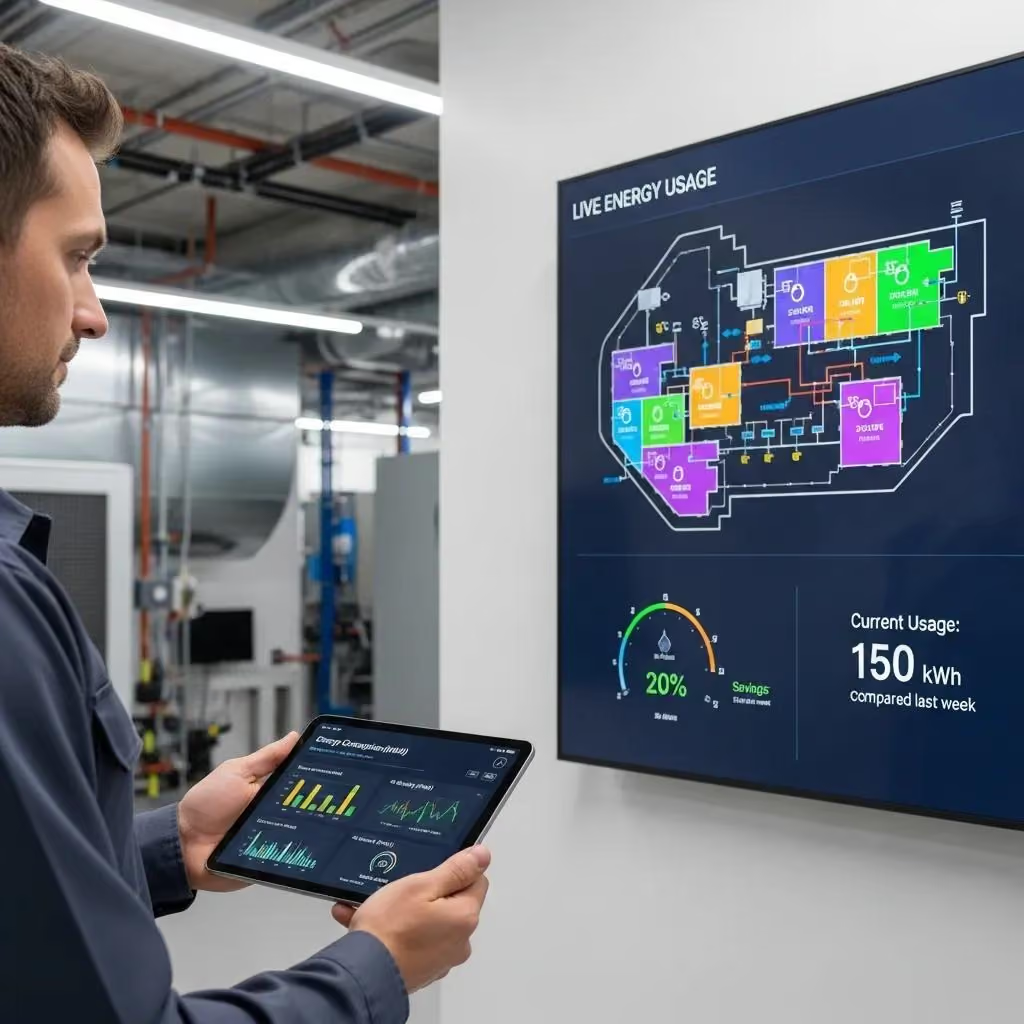
Smart HVAC systems offer numerous advantages that significantly enhance energy efficiency in commercial buildings. These systems utilize advanced technologies to optimize heating, cooling, and ventilation, leading to improved energy savings, enhanced indoor air quality, and reduced operational costs. By integrating smart thermostats and building automation, these systems can adapt to real-time conditions, ensuring optimal performance.
For instance, smart thermostats can learn user preferences and adjust settings accordingly, which can lead to energy savings of up to 20-30%. Additionally, these systems can monitor air quality and adjust ventilation rates to maintain a healthy indoor environment. The implementation of smart HVAC solutions not only reduces energy consumption but also contributes to a more sustainable future.
Further research emphasizes the critical role of intelligent control strategies in maximizing the energy efficiency and user comfort provided by smart HVAC systems.
Intelligent HVAC Control for Smart Building Efficiency
This paper focuses on the optimization of HVAC systems in smart buildings through the implementation of advanced control algorithms to enhance energy efficiency and user comfort. This paper presents a comprehensive review of various intelligent control strategies and evaluates their effectiveness.
Optimizing energy efficiency in smart buildings through intelligent hvac control systems, K Cengiz, 2024
How Do Smart Thermostats and Building Automation Improve Energy Savings?
Smart thermostats play a crucial role in enhancing energy savings by allowing for precise temperature control and scheduling. These devices can learn user habits and adjust settings automatically, ensuring that heating and cooling are only used when necessary. For example, a smart thermostat can lower the temperature during unoccupied hours and raise it before occupants return, optimizing energy use without sacrificing comfort.
Building automation systems further enhance these capabilities by integrating various HVAC components, allowing for centralized control and monitoring. This integration enables real-time adjustments based on occupancy levels and environmental conditions, leading to significant energy savings and improved operational efficiency.
What Role Does Demand Control Ventilation Play in Reducing Energy Use?
Demand control ventilation (DCV) is an innovative approach that adjusts ventilation rates based on occupancy and air quality. By monitoring CO2 levels and occupancy sensors, DCV systems can reduce airflow when spaces are unoccupied, leading to substantial energy savings. This method not only conserves energy but also maintains optimal indoor air quality.
For instance, studies have shown that implementing DCV can reduce energy consumption by 20-40% in certain applications. This technology is particularly beneficial in spaces with variable occupancy, such as conference rooms and auditoriums, where traditional ventilation systems may operate at full capacity regardless of actual demand.
How Do Variable Refrigerant Flow Systems Enhance Commercial HVAC Efficiency?
Variable refrigerant flow (VRF) systems are designed to provide efficient heating and cooling by varying the flow of refrigerant to indoor units based on demand. This technology allows for simultaneous heating and cooling in different zones of a building, maximizing energy efficiency and comfort.
Indeed, the core advantage of VRF technology lies in its autonomous control capabilities, which are continuously being refined for even greater efficiency.
Also, learn how proper maintenance can extend the life of your water heater with our complete guide.
VRF Systems: Autonomous Control for Energy Efficiency
Variable refrigerant flow (VRF) systems autonomously control refrigerant flow to individual indoor units, offering precise temperature control and energy efficiency. However, many existing VRF systems lack the benefits of an integrated system, such as balanced load distribution and centralized control.
Automatic operation method using wireless sensor networks for variable refrigerant flow system: Switchless control variable refrigerant flow system, Y Shimoda, 2025
VRF systems can achieve energy savings of 30% or more compared to traditional HVAC systems. By utilizing inverter-driven compressors, these systems can adjust their output to match the precise heating or cooling needs of each zone, reducing energy waste and enhancing overall system performance.
What Are the Energy Savings Compared to Traditional HVAC Systems?
When comparing VRF systems to traditional HVAC systems, the energy savings are significant. Traditional systems often operate at a fixed capacity, leading to inefficiencies during partial load conditions. In contrast, VRF systems can modulate their output, resulting in lower energy consumption and reduced operational costs.
For example, studies indicate that VRF systems could reduce energy use by 30-40% in commercial applications. This efficiency not only lowers utility bills but also extends the lifespan of the HVAC equipment, providing long-term financial benefits for building owners.
How Does VRF Technology Integrate with Building Automation Systems?
The integration of VRF technology with building automation systems enhances energy management capabilities. By connecting VRF systems to a centralized control platform, building managers can monitor and optimize HVAC performance in real-time. This integration allows for data-driven decision-making, enabling proactive maintenance and adjustments based on occupancy patterns and environmental conditions.
Moreover, the ability to control multiple VRF systems from a single interface simplifies operations and improves overall efficiency. This synergy between VRF technology and building automation systems represents a significant advancement in commercial HVAC solutions.
What Are Energy Recovery Ventilators and How Do They Improve HVAC Efficiency?
Energy recovery ventilators (ERVs) are designed to improve HVAC efficiency by recovering waste heat from exhaust air and using it to precondition incoming fresh air. This process reduces the energy required for heating and cooling, leading to significant energy savings.
ERVs can recover up to 70-80% of the energy from exhaust air, making them an essential component of energy-efficient HVAC systems. By maintaining optimal indoor air quality while minimizing energy consumption, ERVs contribute to a more sustainable building environment.
How Do Energy Recovery Ventilators Recover Waste Heat in Commercial Buildings?
The mechanism of energy recovery ventilators involves the use of a heat exchanger that transfers thermal energy between the outgoing and incoming air streams. As stale air is expelled from the building, it passes through the heat exchanger, transferring its heat to the incoming fresh air. This process effectively preheats or precools the incoming air, reducing the load on the HVAC system.
For example, in cold climates, ERVs can significantly reduce the energy required to heat incoming air during winter months, leading to lower heating costs and improved energy efficiency.
What Are Typical Energy Recovery Efficiency Ratings and Standards?
Energy recovery ventilators are rated based on their efficiency in recovering energy from exhaust air. Typical efficiency ratings range from 60% to 80%, depending on the design and application. Compliance with industry standards, such as ASHRAE 90.1, ensures that ERVs meet minimum performance criteria for energy recovery.
These standards are crucial for building owners seeking to achieve energy efficiency certifications, such as LEED or Energy Star. By selecting ERVs that meet or exceed these standards, building managers can enhance their HVAC systems' performance while contributing to sustainability goals.
Which HVAC Retrofit Solutions Deliver Cost-Effective Energy Savings?
HVAC retrofitting involves upgrading existing systems to improve energy efficiency and performance. Various retrofit solutions can deliver significant cost savings while enhancing the overall functionality of HVAC systems.
Studies consistently demonstrate that strategic HVAC retrofitting is a powerful approach to significantly reduce energy consumption and enhance indoor air quality in commercial buildings.
Commercial HVAC Retrofits: Energy & IAQ Improvement
Heating, ventilation and air conditioning (HVAC) systems account for a major proportion of the total energy consumption in commercial buildings. This study presents an assessment of retrofitting in commercial buildings in terms of improvement in energy performance and indoor air quality.
Commercial building retrofitting: Assessment of improvements in energy performance and indoor air quality, A Alazazmeh, 2021
Common retrofit options include upgrading to high-efficiency chillers, installing variable speed drives, and implementing advanced control systems. These solutions not only reduce energy consumption but also improve occupant comfort and indoor air quality.
What Are Case Studies Demonstrating Successful Commercial HVAC Retrofits?
Numerous case studies highlight the effectiveness of HVAC retrofits in achieving energy savings. For instance, a commercial building in New York City retrofitted its HVAC system with high-efficiency chillers and variable speed drives, resulting in a 20-30% reduction in energy consumption. This upgrade not only lowered utility costs but also improved the building's overall performance.
Another case study demonstrated that implementing advanced control systems in a large office building led to a 20-25% decrease in energy use. These examples illustrate the potential for significant savings through strategic HVAC retrofitting.
How Do Retrofit Solutions Comply with ASHRAE and Energy Star Standards?
Compliance with ASHRAE standards and Energy Star guidelines is essential for HVAC retrofitting projects. These standards provide a framework for evaluating the energy performance of HVAC systems and ensuring that retrofits meet minimum efficiency requirements.
By adhering to these standards, building owners can qualify for energy efficiency incentives and certifications, further enhancing the financial benefits of their retrofit projects. Additionally, compliance with these guidelines helps promote sustainable practices within the commercial building sector.
How Does Predictive Maintenance Using IoT Enhance Commercial HVAC Performance?
Predictive maintenance leverages Internet of Things (IoT) technology to monitor HVAC systems in real-time, allowing for proactive maintenance and optimization. By analyzing data from sensors and connected devices, building managers can identify potential issues before they escalate, reducing downtime and operational costs.
This approach enhances HVAC performance by ensuring that systems operate at peak efficiency. Predictive maintenance can lead to energy savings of up to 15-20% by minimizing unnecessary energy consumption and extending the lifespan of equipment.
What Are the Benefits of IoT Integration for HVAC System Monitoring?
Integrating IoT technology into HVAC systems provides several benefits, including real-time monitoring, data analytics, and predictive capabilities. This integration allows building managers to track system performance, identify inefficiencies, and make informed decisions regarding maintenance and upgrades.
For example, IoT sensors can detect fluctuations in temperature and humidity, enabling timely adjustments to HVAC settings. This responsiveness not only improves energy efficiency but also enhances occupant comfort and satisfaction.
How Does Predictive Maintenance Reduce Operational Costs and Downtime?
Predictive maintenance significantly reduces operational costs by minimizing unplanned downtime and extending the lifespan of HVAC equipment. By addressing potential issues before they lead to system failures, building managers can avoid costly repairs and disruptions.
Additionally, predictive maintenance allows for more efficient scheduling of maintenance activities, reducing labor costs and improving overall operational efficiency. This proactive approach to HVAC management ultimately contributes to a more sustainable and cost-effective building operation.
What Are the Latest Compliance Requirements for Energy-Efficient Commercial HVAC?
Staying compliant with the latest energy efficiency regulations is crucial for commercial buildings. ASHRAE 90.1 and Energy Star guidelines outline the minimum requirements for HVAC systems, ensuring that they meet energy efficiency standards.
These regulations are continually updated to reflect advancements in technology and best practices in energy management. Building owners must stay informed about these changes to maintain compliance and optimize their HVAC systems.
How Do ASHRAE 90.1 and Energy Star Guidelines Impact HVAC Design?
ASHRAE 90.1 provides a comprehensive framework for designing energy-efficient HVAC systems. Compliance with these guidelines ensures that systems are optimized for performance, leading to reduced energy consumption and improved indoor air quality.
Energy Star guidelines further enhance these efforts by providing benchmarks for energy performance. By adhering to these standards, building owners can achieve energy efficiency certifications, which can enhance the marketability of their properties.
What Are Best Practices for Meeting Commercial Building Energy Codes?
Meeting commercial building energy codes requires a strategic approach to HVAC design and implementation. Best practices include conducting energy audits, selecting high-efficiency equipment, and implementing advanced control systems.
Additionally, ongoing training for building staff on energy management practices can further enhance compliance efforts. By prioritizing energy efficiency, building owners can not only meet regulatory requirements but also contribute to a more sustainable future.