What Size Furnace Does Your Erie, PA Home Need?
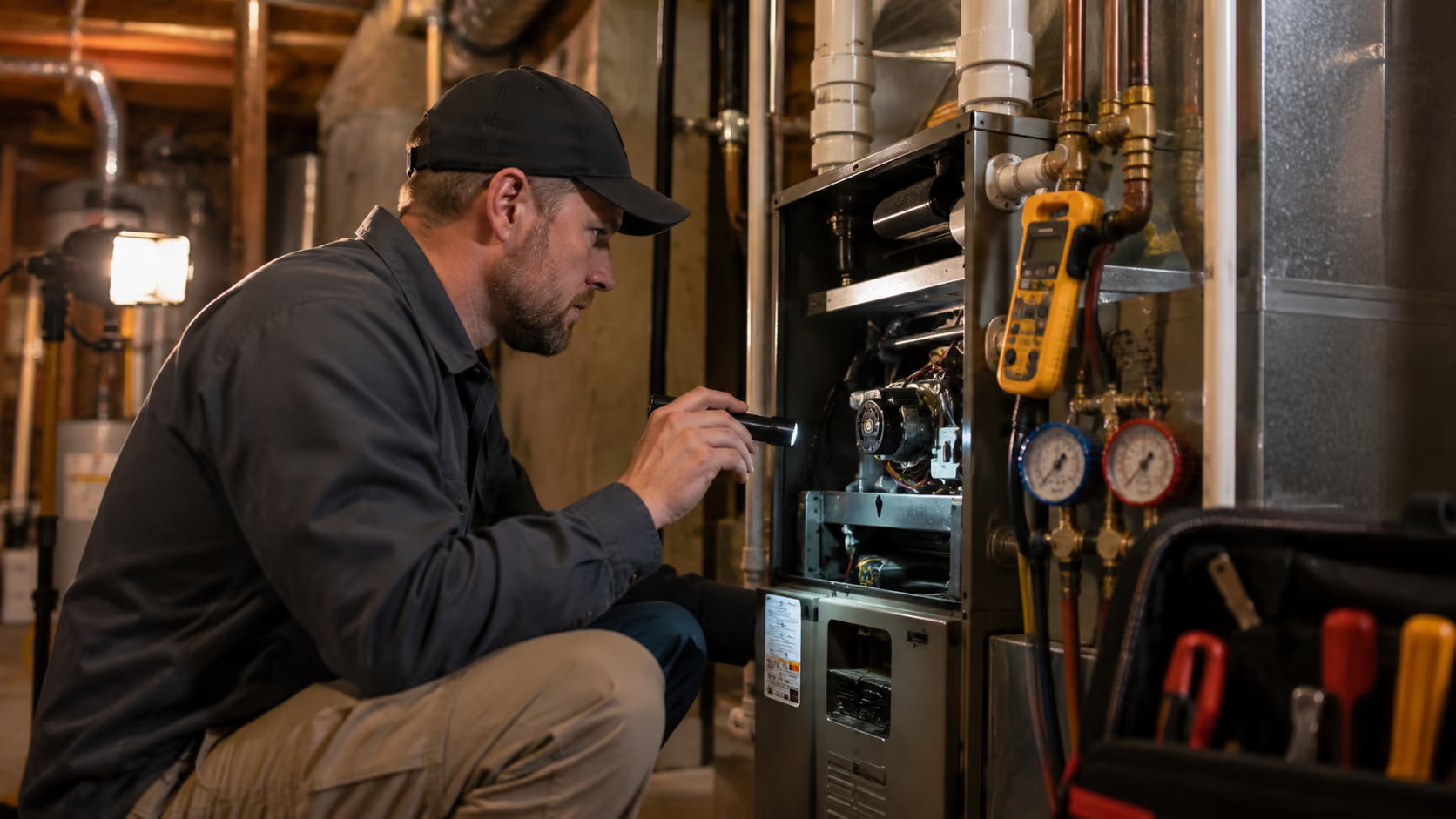
When an Erie winter settles in, “close enough” is not good enough for furnace sizing. A furnace that is too small may struggle during the coldest weather. One that is too large can create its own problems by heating the home too quickly, shutting off, and repeating the cycle.
The right furnace size is not determined by square footage alone. A professional must evaluate how quickly your specific home loses heat and whether the duct system can deliver the required airflow. That process is called a heating-load calculation.
Furnace Size Means Heating Capacity
Residential furnace capacity is commonly expressed in British thermal units per hour, or BTU/h. This tells you how much heat the equipment can produce over time. It is different from the physical dimensions of the cabinet.
You may also see input and output ratings. Input describes the energy entering the furnace; output reflects the usable heat delivered after accounting for efficiency. For example, two furnaces with the same input rating can have different output capacities if their efficiency ratings differ.
This is one reason homeowners should not choose a replacement simply because its label appears to match the old unit. The existing furnace may have been oversized, the home may have changed, and newer equipment may convert fuel into usable heat differently.
Why Square-Foot Rules Can Mislead You
Online charts often recommend a certain number of BTUs for every square foot of living space. That may offer a rough conversation starter, but it cannot select equipment reliably.
Two 2,000-square-foot homes in Erie can have very different heating needs. One may have insulated walls, newer windows, sealed ducts, and a compact two-story design. The other may have drafty additions, older windows, exposed foundation walls, and long duct runs through cold spaces. Their square footage matches; their heat loss does not.
Replacing a furnace based only on the old nameplate or a quick square-foot formula can preserve an old sizing mistake. A home-specific calculation is the better starting point.
What Is a Manual J Load Calculation?
ACCA Manual J is the nationally recognized standard for calculating residential heating and cooling loads. It evaluates the building rather than guessing from one measurement. The result estimates how much heat the home loses under local winter design conditions.
A proper assessment gathers details such as:
- Erie-area outdoor design conditions and the desired indoor temperature
- The dimensions and orientation of walls, ceilings, floors, and rooms
- Insulation levels in attics, walls, floors, basements, and crawl spaces
- Window and exterior-door sizes, types, orientation, and performance
- Air leakage and infiltration through the building envelope
- Duct location, insulation, leakage, and distribution losses
- Fireplaces, ventilation equipment, additions, and other home-specific features
The load result supports the next step: selecting equipment that can meet the calculated demand using manufacturer performance data. Duct design and airflow must then be checked so the system works as a whole.
How Insulation Changes Furnace Size
Insulation slows heat movement through the building envelope. More effective insulation generally lowers the heating load because the house retains warmth longer.
The calculation should reflect actual conditions, not assumptions based on the home’s age. An older Erie home may have received attic insulation or wall upgrades. A newer-looking renovation may still have poorly insulated rim joists, an uninsulated addition, or air leakage around penetrations.
If you plan to improve insulation soon, discuss that before selecting the furnace. Sizing equipment for the house as it exists today—and then substantially reducing heat loss—could leave you with more capacity than the upgraded home needs.
Windows and Doors Matter More Than Their Count
Windows can be a major source of winter heat loss, but the number of windows tells only part of the story. Size, frame material, glass type, air leakage, installation quality, orientation, and exterior exposure all influence performance.
A large older window may lose more heat than several efficient replacement windows. Drafty exterior doors and poorly sealed frames add to the load as well. A room-by-room assessment helps identify why one area needs more heating airflow than another.
Home Layout Affects Heat Distribution
A compact two-story home often behaves differently from a long ranch even when both have the same finished area. Exterior-wall exposure, ceiling height, open stairways, cathedral ceilings, additions, rooms over garages, and finished basements can all change heat loss and comfort.
Room-by-room results also help determine how much conditioned air each space needs. That information matters when evaluating supply registers, return-air paths, zoning, and persistent hot or cold rooms.
If the old system leaves an upstairs bedroom cold, simply installing a larger furnace may not solve it. The real problem could be duct leakage, inadequate return air, an unbalanced branch, missing insulation, or an addition that was never integrated properly.
Your Ductwork Must Handle the Furnace
The furnace and duct system are partners. The blower has to move the required air through supply and return ducts while staying within the equipment’s allowable pressure range.
A higher-capacity furnace can require more airflow than existing ducts can handle. Undersized, restricted, leaky, or poorly arranged ducts may contribute to noise, weak airflow, uneven temperatures, overheating, and safety-limit shutdowns.
Before installation, the contractor should evaluate relevant duct dimensions, returns, filters, registers, accessible leakage, and airflow restrictions. Depending on the findings, the project may include duct sealing, added return capacity, modifications, or a different equipment selection.
Why an Oversized Furnace Is Not “Extra Protection”
It is understandable to think that more heating capacity provides a margin of safety. In practice, excessive capacity can reduce comfort and create unnecessary wear.
An oversized furnace may:
- Heat the thermostat area quickly and shut down before other rooms become comfortable
- Cycle on and off frequently instead of operating in longer, steadier periods
- Create noticeable temperature swings
- Produce more airflow noise when paired with inadequate ducts
- Increase wear on ignition, control, and blower components
- Complicate comfort and efficiency even though the home feels warm initially
Modern staged or modulating equipment can adjust output, but that does not eliminate the need for correct sizing. The system still needs an appropriate capacity range and compatible ductwork.
What Happens If the Furnace Is Too Small?
An undersized furnace may run for long periods during severe weather and still fail to maintain the thermostat setting. However, long cycles alone do not prove the furnace is too small. Properly sized equipment is expected to run longer when outdoor conditions approach the design temperature.
Before blaming capacity, a technician may need to check filters, fuel delivery, burners, controls, blower performance, duct restrictions, and building-envelope problems. Adding capacity without diagnosing the system can hide the symptom while creating new airflow issues.
Should You Match the Size of Your Current Furnace?
Not automatically. Matching the old furnace can make sense only after confirming that its capacity was appropriate and that the home and duct system have not materially changed.
Recalculate when the home has received—or will receive—changes such as:
- New windows, doors, air sealing, or insulation
- A finished basement, converted attic, addition, or changed floor plan
- Duct additions, removals, repairs, or zoning
- Persistent comfort problems with the existing system
- A change in furnace efficiency, fuel type, or equipment technology
Questions to Ask Before Approving a Furnace Quote
- Will you perform a home-specific heating-load calculation?
- What heating load did the calculation produce?
- What are the proposed furnace’s input, output, and efficiency ratings?
- How does the selected capacity relate to the calculated load?
- Was the existing supply and return ductwork evaluated for airflow?
- Are duct modifications, electrical work, gas-line changes, permits, or thermostat upgrades included?
- How will the finished system be tested and commissioned?
A trustworthy proposal should connect the home’s measured needs to the selected equipment. “This is what you already have” or “this size usually works” is not the same as demonstrating fit.
Professional Furnace Sizing in Erie County
C. Carlin Plumbing states that its furnace installation process includes a pre-installation assessment, heating-load calculation, ductwork evaluation, and inspection of electrical and gas connections. That approach helps match the furnace to the home instead of relying on a square-foot shortcut.
The company installs high-efficiency gas, electric, and oil furnaces and serves Erie and surrounding communities, including McKean, Wesleyville, Lawrence Park, Harborcreek, Meadville, Warren, and Corry.
If your furnace is failing, uncomfortable, or approaching replacement, schedule a furnace installation assessment with C. Carlin Plumbing. The right conversation begins with the house, the heat loss, and the ductwork—not a guess at the equipment size.
Frequently Asked Questions
Can I calculate furnace size from square footage?
Square footage alone is not enough for final equipment selection. It does not capture insulation, windows, leakage, layout, duct losses, or local design conditions. Use it only as a rough starting point and rely on a professional load calculation for installation.
Is a larger furnace more efficient?
No. Capacity and efficiency are different measurements. A furnace can be large but inefficient, or appropriately sized and highly efficient. Excess capacity can also contribute to short cycling and uneven comfort.
Does replacing windows mean I need a smaller furnace?
It may reduce the heating load, but the effect depends on the original windows, the replacements, air sealing, and the rest of the building envelope. A new load calculation can account for completed or firmly planned upgrades.
Can old ductwork work with a new furnace?
Sometimes, but it should be evaluated. The duct system must provide suitable airflow for the selected furnace and blower. Restrictions, leakage, or inadequate returns may require correction.